

Jim Cartwright’s Road at the Royal Exchange Theatre is a Truly Unique Experience
- STEVE COOKE AATA

- Feb 20
- 3 min read
Review by Seamus Kelly
Road, written by Jim Cartwright, is brought to Manchester on its 40th Anniversary as part of the Royal Exchange Theatre’s 50th Anniversary celebrations titled Homecoming.
Road is a powerful indictment of a government or system, led by Margaret Thatcher, that didn’t value the working-class people who were ground down by low wages, unemployment and a lack of hope for the future. Sadly, those same themes feel relevant today.
The audience experience at the Royal Exchange is always special as plays are performed in the round in the stunning Module. For this presentation of Road, the audience get to experience something truly unique as almost the whole building becomes part of the road. The audience are invited to wander through it mixing with actors and props with little unexpected cameo performances. Clever touches such as a chip shop, a dilapidated van and garage, piles of discarded furniture and lots of old televisions displaying the BBC test card, help to create the vibe of a poverty stricken, northern back street in the 1980s.

Once the audience have been invited to take their seats in the Module the performers and set design really shine. Johnny Vegas, as Scullery, opens the action and fills the role of a guide to the road and the people who live there. He portrays a brash and somewhat obnoxious man masking his real, thoughtful and hopeless character behind drink and bluster. Throughout the performance Vegas brings a great range of emotions and lots of energy.
Perhaps the real stars of the show are the three women, Lucy Beaumont, Shobna Gulati and Lesley Joseph who between them portray multiple characters and make each of them feel real and grounded. All three deliver standout moments of humour, sadness, anger and despair with hope emerging in the show’s finale. These women are aware of the harsh realities of their world, and they each have their own ways of handling them with northern grit, humour, tenderness and vulnerability. In our modern times we’d call these women survivors, yet in the broken times forty years ago they’d have been referred to in much more derogatory language.

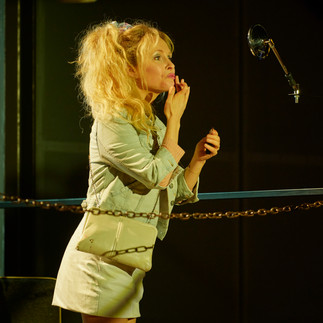


The play finishes on a note of hope with speeches from the younger generation, one delivered particularly powerfully by Lucy Beaumont, backed by Otis Reading’s Try a Little Tenderness.
The whole cast directed by Selina Cartmell are excellent and the Royal Exchange has created something distinct and memorable.





My only small criticism that the modern audience, far removed from the time and environment portrayed, risk becoming cultural observers, like tourists dropping into a version of the past whilst being insulated from it. That could distract from the themes of the grinding poverty and particularly the lack of hope felt by so many in Thatcher’s Britain.
Having said that the whole experience is powerfully thought provoking and for those of us who remember life in Britain in the eighties there were many recognisable true to life scenes and moments.
Note for those of a sensitive disposition; the play does include lots of very strong language, sexual references and characters smoking and drinking heavily. Also, the heavy use of smoke machines which for some people, including myself, can cause issues.
All performances of Road are currently sold out. Any returned tickets will be released for sale online as they become available.
Road at the Royal Exchange will be a hard act to follow but the 50th Anniversary year celebrations continue with Noel Coward’s Private Lives, running from 27th March to 2nd May, and a further five big productions. Details of all shows can be found on the Royal Exchange Theatre website at www.royalexchange.co.uk


Comments